Color Line Ferry Color Fantasy

››› Book ferries cheap online

Ferries are the floating links between countries, islands and coastal regions. They transport millions of passengers, cars, motorcycles, trucks and even trains across rivers, seas and oceans every day. In contrast to cruise ships, which are exclusively for pleasure, ferries primarily have a transportation and connection function – they are part of the public infrastructure.
Today, modern ferries stand for far more than pure practicality. They offer comfortable cabins, restaurants, lounges, shopping areas and even wellness zones. Especially on longer routes, such as across the Baltic Sea or in the Mediterranean, you can expect a real cruise feeling – only with a vehicle on board.
On ferry-guide.com you will find a comprehensive overview of the most important ferries in Europe and worldwide. From classic car ferries to modern high-speed catamarans and environmentally friendly hybrid ferries – here you can get to know the ships that take people and vehicles across the sea every day.
Ferries vary greatly in terms of design, size, speed and area of operation. Below you will find an overview of the most important types – from small inland ferries to the gigantic RoPax giants of the Baltic Sea.
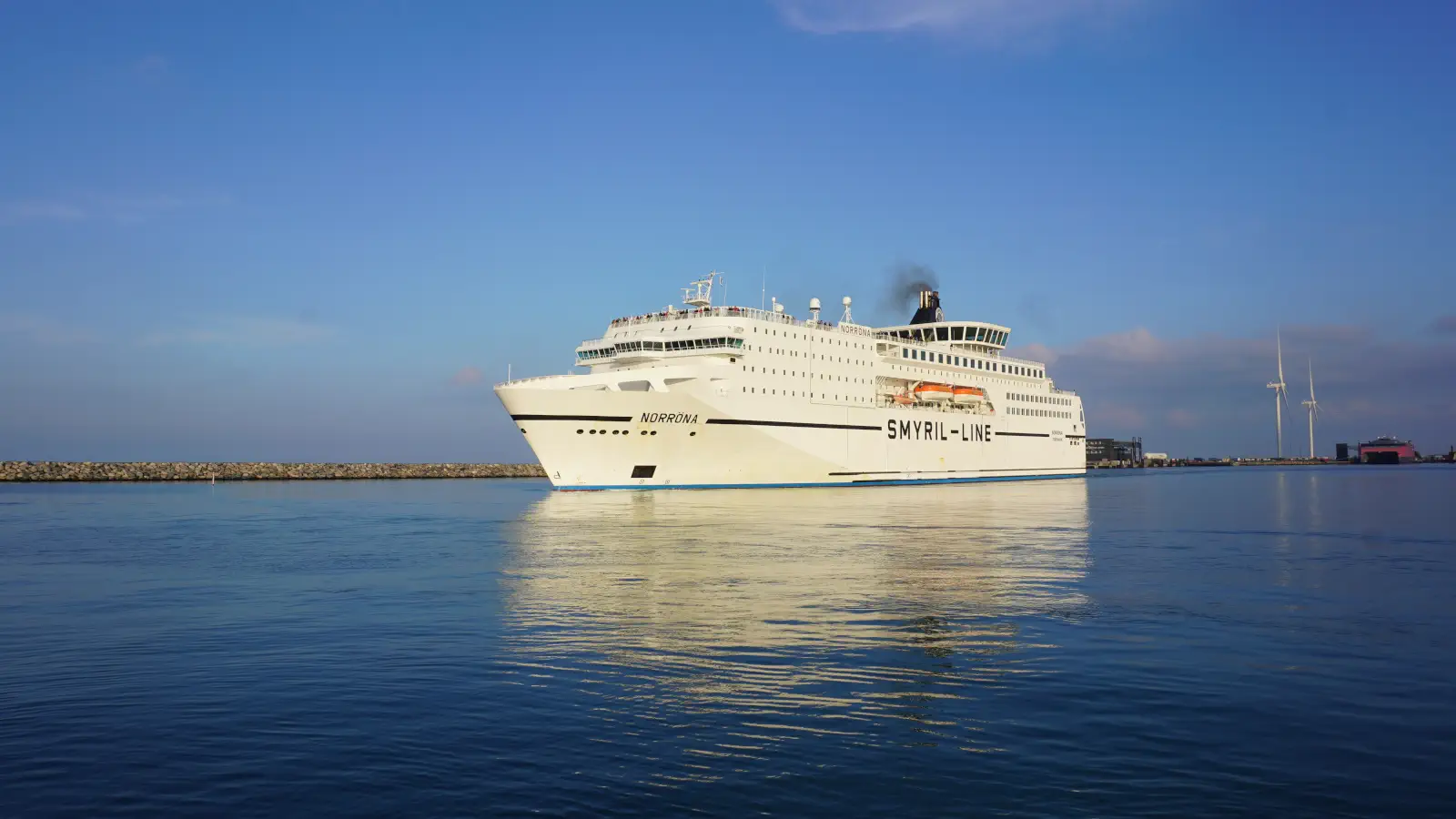
The term “RoPax” stands for “Roll-on/Roll-off Passenger” – i.e. ships that transport both vehicles (roll-on/roll-off) and passengers. They are the standard on most European ferry routes. Well-known examples are the Stena Britannica or the Color Fantasy. These ships have several vehicle decks, hundreds of cabins, restaurants and entertainment facilities on board. RoPax Ferries are ideal for traveling long distances by car or motorcycle.
Fast Ferries – often built as catamarans or trimaran ferries – focus on speed rather than capacity. They connect Ibiza with the Spanish mainland or Denmark with Sweden in a short space of time. Thanks to their lightweight aluminum hulls and powerful drives, they can reach speeds of over 35 knots. Comfort zones, panoramic decks and a modern design make them particularly popular with day travelers.
Night ferries are floating hotels. They usually travel longer distances, for example from Kiel to Oslo or from Rome to Olbia. On board, there are cabins of different categories, restaurants, bars and sometimes even an on-board movie theater. The advantage: you travel overnight and wake up relaxed at your destination – perfect for vacationers who want to save time and enjoy comfort.
Inland ferries operate on rivers, lakes or between small islands. Examples include the Elbe ferries in northern Germany, the Lake Constance ferry Friedrichshafen-Romanshorn or the Sylt ferry. They are smaller, but frequently in continuous operation – often around the clock. Many of them are important traffic arteries for commuters or tourists who want to get from one side to the other quickly.
Long-distance ferries connect entire countries and continents, for example Spain and Majorca, France and North Africa or Italy and Greece. These ships are usually particularly large and comfortable, offering restaurants, duty-free stores, family cabins and sun decks. They are designed for long crossings of 8 to 24 hours and have state-of-the-art safety and stabilization systems.
From the Baltic Sea to the Mediterranean, hundreds of ferries are in service every day. Some of them are true legends at sea and stand for reliability, comfort and technical innovation. Here you will find a selection of particularly well-known ships that, with a bit of luck, you can experience for yourself.
This selection shows only a fraction of the ferries that sail Europe’s waters every day. On ferry-guide.com you will find separate pages for many of these ships with technical data, photos and information on shipping companies, routes and equipment.
The ferry Skåne is the largest combined rail and RoPax ferry in the world. It…
UpdateDie Fähre Cuxhaven-Brunsbüttel mit der Elbferry Fähre Greenferry I wurde im Dezember 2021 eingestellt und…
The FRS Halunder Jet catamaran is a modern, versatile watercraft designed for demanding coastal and…
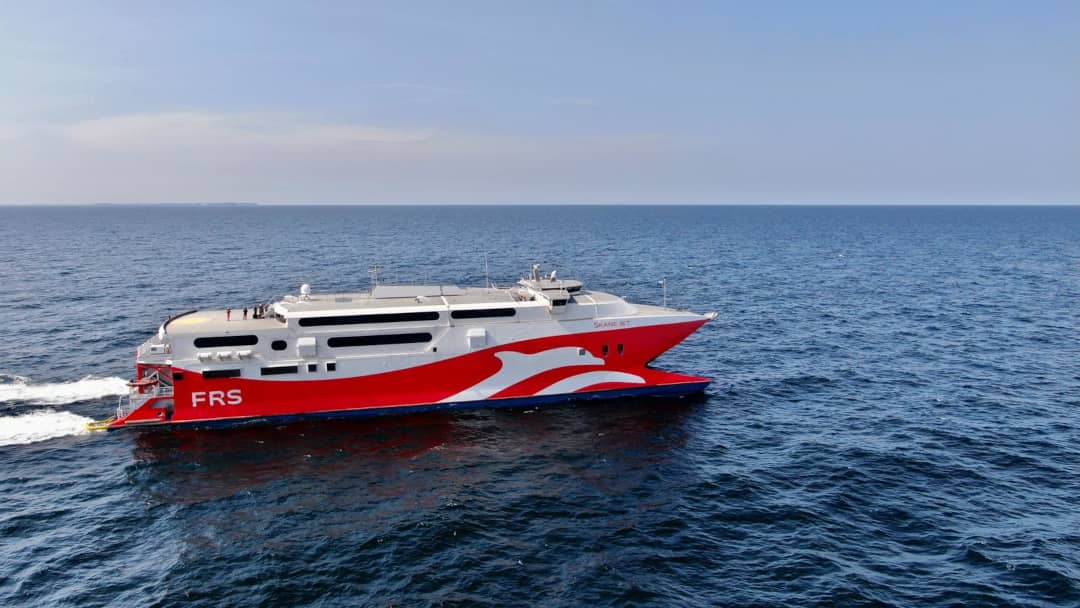
Welcome aboard the Skane Jet The Skane Jet is a catamaran from the FRS Baltic…

The Scandlines Hybrid Ferry Copenhagen with a new rotor sail leaving the Rostock sea canal…

The ferry Mecklenburg-Vorpommern is operated by the Swedish shipping company Stena Line and is used…
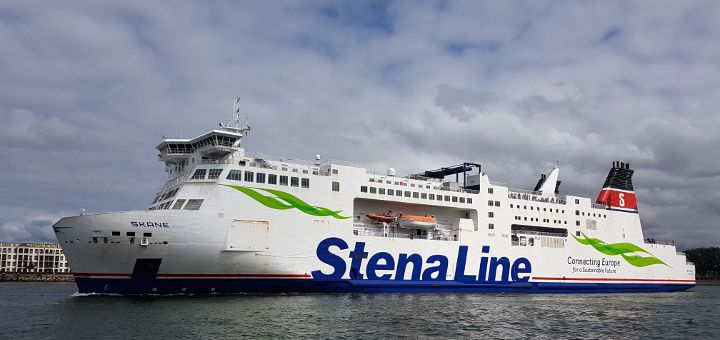
The ferry Skåne is the largest combined rail and RoPax ferry in the world. It…
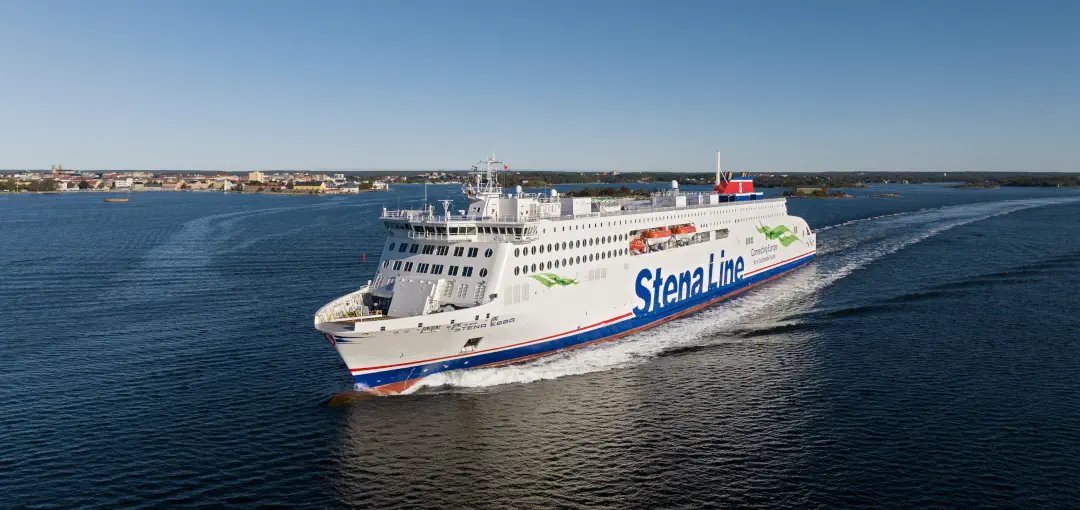
The Stena Line ferry Stena Ebba belongs to the new environmentally friendly generation of E-Flexer…
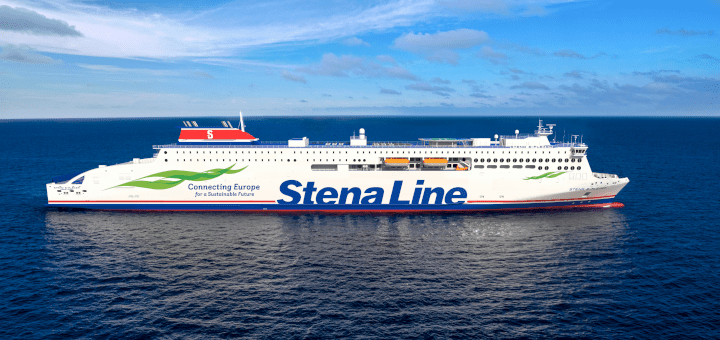
The Stena Line Ferry Stena Edda is part of the new environmentally friendly generation of…
The Stena Line Ferry Stena Edda is part of the new environmentally friendly generation of…
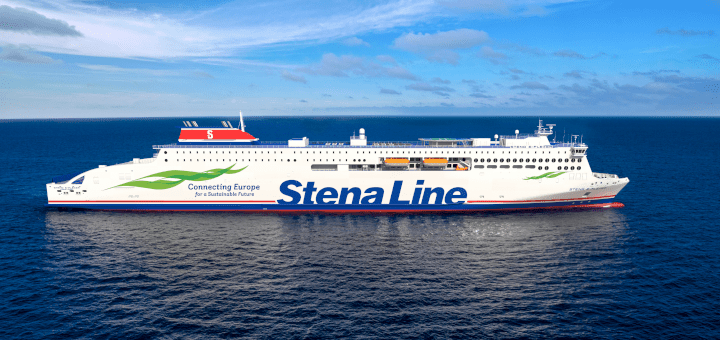
The Stena Line Ferry Stena Estrid is part of the new environmentally friendly generation of…

The Stena Line Ferry Stena Germanica is used on the routes Kiel – Gothenburg and…

The TT-Line Ferry Akka, which entered service in July 2001 as the Nils Holgersson VI,…
The Ferry Tinker Bell is a Ro-Pax Ferry of the shipping company TT-Line, which is…
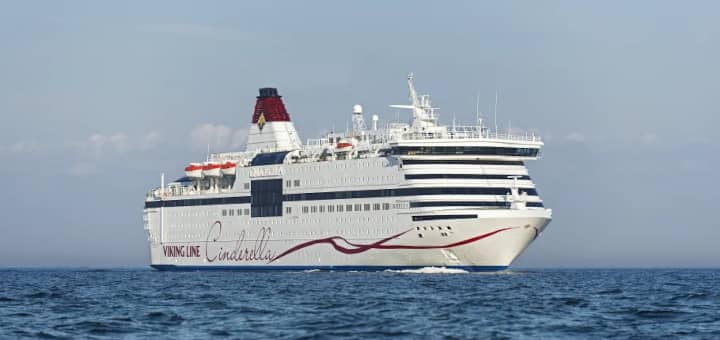
The Viking Line Cinderella is a cruise ferry operated by the Swedish shipping company Viking…
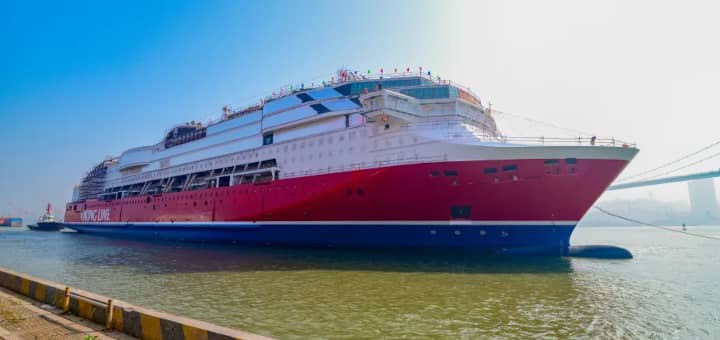
The Viking Line Viking Glory is a cruise ferry operated by the Swedish shipping company…
Modern ferries are floating multifunctional buildings: they have to be safe, efficient, economical and at the same time comfortable for hundreds or even thousands of passengers. To make this work, today’s Ferries are built with a combination of modern propulsion systems, stable hull shapes, extensive on-board technology and comfort-oriented interior fittings.
In principle, ferries consist of several clearly separated areas: the vehicle deck (or several decks), the passenger area (lounges, restaurants, stores), the hotel area (cabins, suites) and the technical area (engine room, bridge, navigation and safety systems). The focus shifts depending on the application – short-haul, night service or long-haul: a short-haul ferry needs fewer cabins, but fast loading and unloading; a night ferry needs many cabins and good soundproofing systems.
The trend for ferries is clearly moving towards clean and efficient drives. Many shipping companies are now relying on LNG (liquefied natural gas), hybrid drives or at least exhaust gas aftertreatment systems. There are two reasons for this: stricter international regulations (IMO, Emission Control Areas in the North and Baltic Seas) and passengers’ growing demand for sustainable travel.
Ferries are one of the most strictly regulated types of ship. Fire protection, life-saving equipment, emergency exits, bulkheads, water defense systems – everything is secured in multiple ways. Modern Ferries have automatic fire alarm systems, watertight doors, their own emergency power systems and life-saving equipment for everyone on board. The crew is also specially trained because many different groups of people travel on Ferries: Families, truck drivers, elderly travelers, foot passengers.
To make you feel comfortable on board, many shipping companies offer a very close-to-shore service. What you know from airports or cruise ships can now often also be found on Ferries:
On premium routes (e.g. Kiel-Oslo, Amsterdam-Newcastle, Genoa-Olbia), wellness, spa, conference rooms or even small shows are often added. This makes the ferry trip a real alternative to flying – especially if you want to take your car with you.
Reducing emissions is an important issue for new ferries. In addition to LNG, SCR catalytic converters, waste heat recovery and optimized hull shapes are being used. Some shipping companies are already testing purely electric Ferries for short journeys. The trend is clear: ferries are set to become quieter, cleaner and more energy-efficient – without passengers having to sacrifice comfort.
Ferries are not just about getting from A to B – they are often the best part of the journey. Especially if you are traveling by car, camper or motorcycle, the Ferries is the most relaxed way to cross water. No check-in stress like at the airport, no luggage limits like on a plane and no hours of highway miles. You drive on board, park your vehicle – and from then on, your vacation begins.
Depending on the shipping company and route, you should be at the port between 15 and 240 minutes before departure. First you go to the check-in lane, where your ticket, ID and, if applicable, vehicle details are checked. You then line up in the waiting lane and – after an announcement from the crew – board the ship. Foot passengers usually board via a separate gangway.
After parking: lock the vehicle, memorize the decks (sometimes several vehicle decks!), take only the essentials with you. You will not normally be able to access the car deck during the journey. So take hand luggage, valuables and any medication with you upstairs.
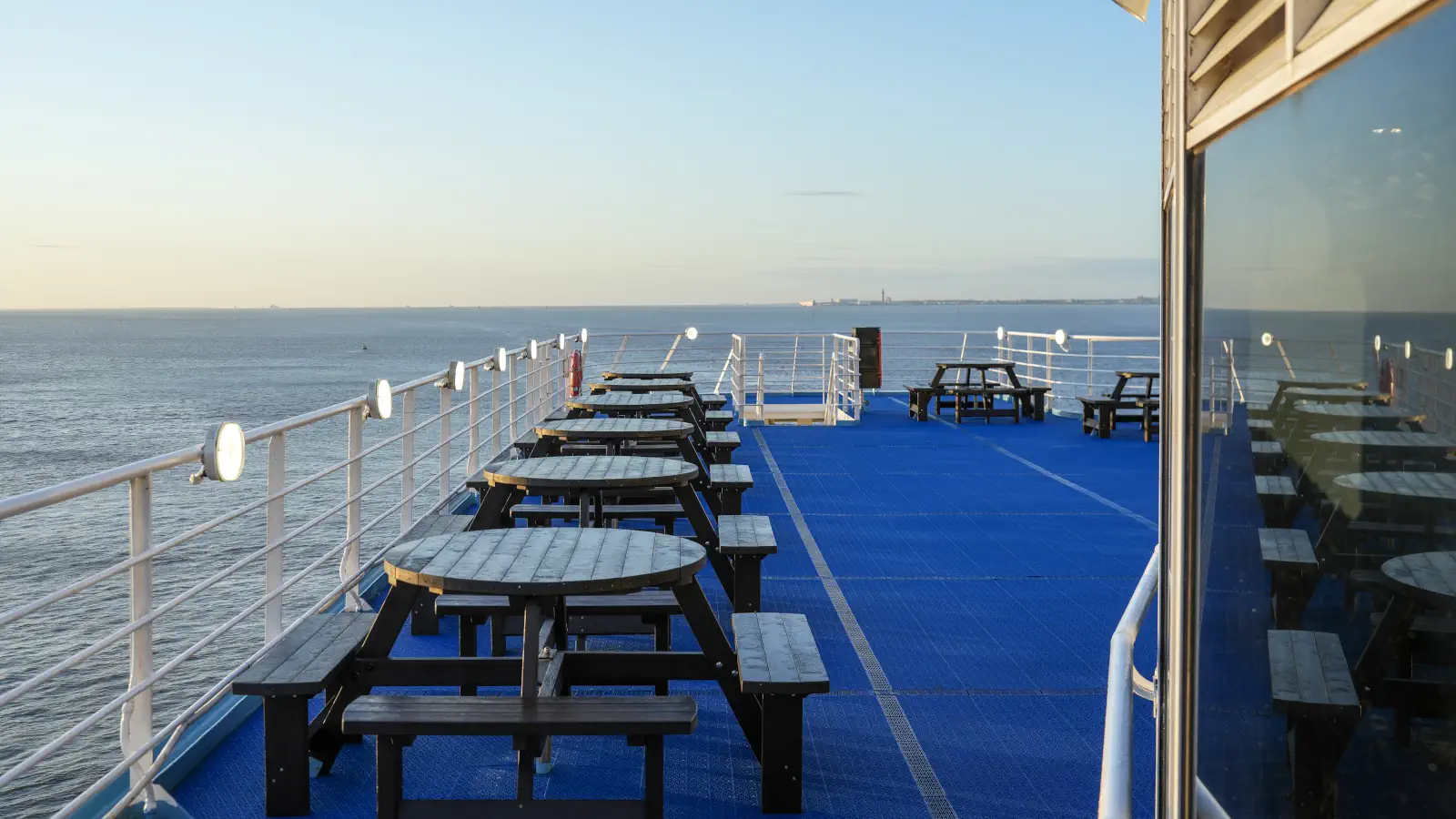
Most modern ferries are built so that you have as much of the sea as possible during the crossing. Large panoramic windows, outside decks and forward lounges ensure that you really experience the journey. Depending on the ship, you can:
Day trips are ideal for short routes such as Denmark-Sweden, Finland-Estonia or Spain-Balearic Islands. You don’t need a cabin, can use the time on board to work, read or chill out and arrive at your destination in just a few hours.
Night cruises are practical if you are covering long distances – for example Germany-Norway, Italy-Sicily or France-Corsica. You go on board in the evening, eat comfortably, sleep in your cabin and arrive rested in the morning. This also saves you an overnight stay in a hotel.
If you want to know what the process looks like on a specific route, you will find a separate travel description for many connections on ferry-guide.com – from check-in to arrival.
Almost every major shipping company has its own fleet of ferries – from small catamarans to large overnight ferries with cabins, restaurants and sun decks. Depending on which shipping company you travel with, you will experience very different ships, designs and services on board. Here you will find an overview of some well-known shipping companies and their ferries.
The Norwegian shipping company Color Line is known for its particularly comfortable ferries. The Color Fantasy and Color Magic sail between Kiel and Oslo and are considered true cruise ferries – with buffet restaurants, shows, spa and shopping facilities on board. If you want to get to Norway quickly, take the modern fast ferries SuperSpeed 1 & 2 from Hirtshals to Kristiansand or Larvik.
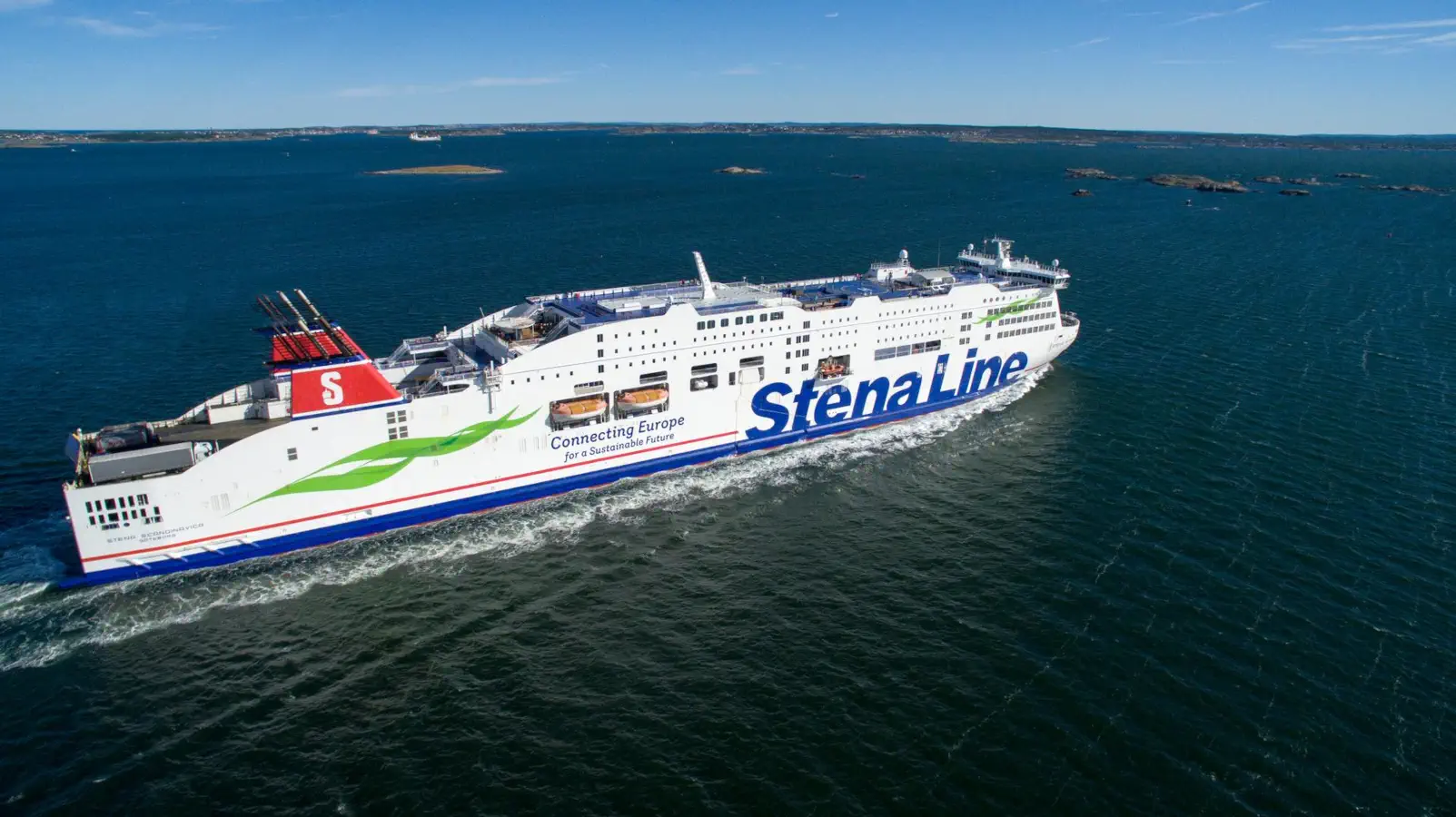
The Swedish shipping company Stena Line operates one of the largest ferry networks in Europe. Its ships, such as the Stena Germanica and Stena Scandinavica, sail between Kiel and Gothenburg. The so-called E-Flexer Ferries are particularly modern and are designed for sustainability, energy efficiency and comfort. Many Stena ships have cabins, family areas and restaurants with sea views.
DFDS Seaways mainly connects Northern and Western Europe. The well-known ships King Seaways and Princess Seaways sail between Amsterdam (Ijmuiden) and Newcastle. Real cruise flair awaits you on board with a buffet, cinema, bars and outdoor deck. DFDS also operates modern ships on the route between Dieppe and Newhaven.
In the Mediterranean, GNV stands for large, comfortable Ferries. Ships such as the GNV Spirit or GNV Atlas connect Barcelona with Palma de Mallorca, Civitavecchia with Tunis or Italian ports with the Balearic Islands. The GNV ships offer cabins in several categories, à la carte restaurants, sun decks and family-friendliness – ideal for longer Mediterranean crossings.
Yellow color, large selection, French-Italian flair: Corsica Ferries (also known as Sardinia Ferries) operate ferry routes to Corsica, Sardinia and Elba. Ships such as the Pascal Lota or the Mega Express series offer comfortable cabins, sun decks, restaurants and a relaxed vacation feeling. Ideal if you are starting your Mediterranean vacation by car or motorhome.
The Spanish shipping company Balearia connects the mainland with the Balearic Islands and North Africa. Its modern ships include the LNG-powered Hypatia de Alejandría and the fast ferry Cecilia Payne. Balearia attaches great importance to sustainability and is increasingly relying on hybrid technology and environmentally friendly fuels. The routes from Barcelona to Mallorca or from Denia to Ibiza are particularly popular.
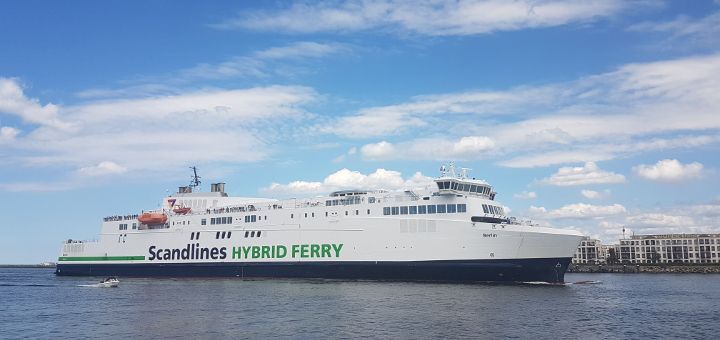
The German-Danish shipping company Scandlines operates the most important ferry connections between Germany and Denmark. The hybrid ferries Berlin, Copenhagen and Schleswig-Holstein on the Rostock-Gedser and Puttgarden-Rødby routes are particularly well known. Scandlines is considered a pioneer in environmentally friendly hybrid propulsion and shore-side power supply – a real trailblazer for sustainable Baltic Sea ferries.
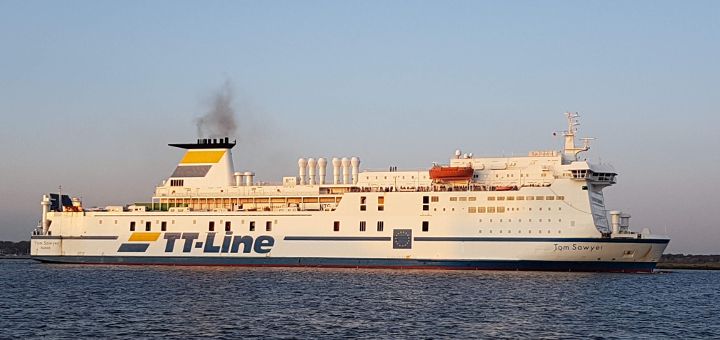
TT-Line connects Germany with Sweden and Poland. Its ships such as the Nils Holgersson, Peter Pan and the new Green Ships operate between Travemünde and Trelleborg as well as Swinemünde and Trelleborg. The Green Ships are modern LNG-powered Ferries with a focus on energy efficiency, cabin comfort and quiet operation. They are particularly popular with travelers with cars or campers heading for Scandinavia.
The Italian shipping company Moby Lines is known for its colorful ships – decorated with motifs from Looney Tunes. It connects the Italian mainland with Sardinia, Corsica and Elba. The most famous ships include the Moby Dada, Moby Aki and Moby Wonder. Comfortable cabins, restaurants and spacious sun decks await you on board – perfect for families and vacationers who want to enjoy a relaxing trip across the Mediterranean.
The Finnish shipping company Finnlines operates modern RoPax ferries between Germany, Finland and Sweden. The Finnswan, Finnstar and Finnmaid ships are particularly popular on the Travemünde-Helsinki and Malmö-Travemünde routes. Finnlines combines freight and passenger traffic – so the travel experience is quiet, comfortable and authentically Nordic. The newer ships are energy-efficient, spacious and offer a surprisingly good on-board restaurant.
Each of these shipping companies has its own style: from Scandinavian tranquillity to a Mediterranean lifestyle and high-speed technology in the Mediterranean. No matter which one you travel with – the experience on board is always part of your adventure at sea.
Shipping is changing – and ferries play a central role in this. More and more shipping companies are investing in environmentally friendly drives, hybrid technology and digital systems. The future of ferry shipping is quieter, cleaner and more efficient – without sacrificing comfort.
The next few years will be characterized by alternative drives. More and more Ferries are running on LNG or methanol, while others are relying on hybrid and electric drives. In Scandinavia, purely electric short-distance ferries are already in operation – for example between Norway and Denmark. This technology not only saves fuel, but also significantly reduces CO₂ emissions.
Lighter materials, better hydrodynamics and smart control systems help to save energy. Modern hulls glide through the water more efficiently and cause less wave impact – an important contribution to coastal protection. At the same time, new paints and antifouling systems ensure that fewer algae or mussels pollute the hull.
A lot is also changing digitally: automated check-ins, online bookings, on-board apps and cabin-wide Wi-Fi are increasingly becoming standard. Navigation systems work with artificial intelligence to optimize weather, currents and energy consumption. In the long term, there are even plans for autonomous ferries – the first test projects are already underway in Norway.
The future of ferries is therefore not only technically exciting, but also a contribution to sustainable mobility. Anyone traveling by Ferries today is part of this development – more environmentally friendly, more conscious and still comfortable.
Here you will find answers to frequently asked questions about ferries, their technology and everyday travel on board.
A ferry is a ship that transports passengers, vehicles or goods across bodies of water. In contrast to cruise ships, Ferries are primarily used for transportation between ports – often as part of the public transport network.
Ferries and cruise ships differ primarily in their purpose, equipment and itinerary. A ferry is primarily used for transportation – it connects two fixed ports and enables people, cars or trucks to be brought from A to B. The focus is therefore on mobility and efficiency. The focus is therefore on mobility and efficiency.
A cruise ship, on the other hand, is a floating hotel that usually undertakes round trips and calls at many ports in succession. The focus here is on the travel experience – with shows, pools, restaurants and entertainment.
The so-called cruise ferries (e.g. Color Line or DFDS) are an exciting hybrid form: these ships connect two fixed ports, but also offer the comfort of a mini cruise. You can eat, store, stay overnight and enjoy entertainment on board – while traveling to your destination at the same time. This concept is particularly popular on longer overnight routes.
Many well-known ships sail the Baltic Sea, for example the Stena Germanica, Finnswan, Color Fantasy and Mecklenburg-Vorpommern. They connect Germany, Sweden, Finland, Denmark and Norway.
The largest ferries include the Ulysses (Irish Ferries) and the Color Fantasy (Color Line). Both are over 220 meters long and offer space for more than 2,000 passengers and hundreds of vehicles. The two new Moby Lines Ferries Moby Fantasy and Moby Legacy are also among the largest ferries in the world.
The speed depends on the type: conventional Ferries usually travel at 18-25 knots (approx. 35-45 km/h), fast ferries or catamarans reach over 35 knots (up to 65 km/h).
RoPax is the abbreviation for “Roll-on/Roll-off Passenger” – a type of ship on which both vehicles (RoRo) and passengers (Pax) are transported. This type is the most common in Europe.
More and more shipping companies are turning to LNG, hybrid or electric drives. Examples include the Stena Germanica (methanol), the Color Hybrid (plug-in hybrid) and the Hypatia de Alejandría (LNG).
Ferries are among the safest means of transportation in the world. They are subject to strict international safety regulations (SOLAS, IMO) and are equipped with rescue systems, emergency power generators and trained personnel. Statistically, a ferry trip is safer than a car journey on the road.
Yes, you can use the outside decks on almost all larger Ferries. There are seats, photo points and often also small bars. Access may only be temporarily blocked in the event of bad weather or security measures.
The easiest way is online – for example via the ferry-guide.com travel search. There you will find current timetables, prices and a comparison of all available shipping companies. This allows you to choose the right ship and cabin for you.
These FAQs will help you to better understand the world of ferries. If you want to go even deeper, you can find detailed pages with technical data, photos and experience reports for many ships on ferry-guide.com.
You are currently viewing a placeholder content from Facebook. To access the actual content, click the button below. Please note that doing so will share data with third-party providers.
More InformationYou are currently viewing a placeholder content from Instagram. To access the actual content, click the button below. Please note that doing so will share data with third-party providers.
More InformationYou are currently viewing a placeholder content from reCAPTCHA. To access the actual content, click the button below. Please note that doing so will share data with third-party providers.
More InformationYou are currently viewing a placeholder content from X. To access the actual content, click the button below. Please note that doing so will share data with third-party providers.
More Information