
The Caribbean as a destination
The Caribbean is a very popular vacation destination. The many islands—each with its own unique character—featuring white-sand beaches, palm trees, and blue-to-turquoise seas make our hearts race. The Caribbean islands include, for example, Jamaica, the Cayman Islands, the Dominican Republic, the ABC Islands, Haiti, Cuba, Puerto Rico, and the Virgin Islands. Each has its own special charm, but everywhere you’ll find the streets bustling with life, and big American cars are just as much a part of the scene as old, stately colonial buildings. A cruise lets you experience several islands up close in a single trip.
Table of contents
Caribbean Ferry Deals
You want to travel by ship through the Caribbean? Then take a look at our current Caribbean offers:
Best time to travel to the Caribbean
The Caribbean is located in the tropics and therefore enjoys temperatures above 25 degrees Celsius year-round. From June through November, however, you should expect severe tropical storms, which, based on experience, are at their worst in August and September. Hurricanes and cyclones often sweep across the islands at speeds of 300 km/h during this time, and in the months that follow, there will be at least one very heavy rainstorm. The best time to travel is therefore during the first half of the year, though this varies across the region. For Barbados, December through April is recommended; for the Dominican Republic, November through April; and for a trip to Cuba, November through May. These travel periods are also ideal for a trip that passes through the Panama Canal. Although ships offer cruises year-round—and a hurricane can’t harm the ship itself—you may have to expect route changes or restrictions on shore excursions.
Ports in the Caribbean
Castries – Saint Lucia
Castries is the capital of the island nation of St. Lucia, a neighboring island of Martinique and St. Vincent. The harbor is located at the end of a well-protected bay and can accommodate up to five ships a day. Particularly large ships anchor outside the bay and bring passengers ashore via tenders. The island has two striking volcanic peaks in its southeastern part, known as the Pitons.

{%CAPTION%}
Miami – USA
The Dante B. Fascell Port of Miami is the world’s largest port for cruise ships. Miami is a city in the U.S. state of Florida. Every day, more than 10,000 passengers board ships at its seven terminals. The port is directly connected to downtown via a tunnel. The subtropical climate averages at least 18 degrees Celsius; summers are hot and humid, and winters are warm and dry. Places worth visiting include the Art Deco district in Miami Beach, the Cuban neighborhood around Calle Ocho, and the Miami Seaquarium on Key Biscayne. The port is considered a hub for travel to the Caribbean and all of Central America.

{%CAPTION%}
Scarborough – Tobago
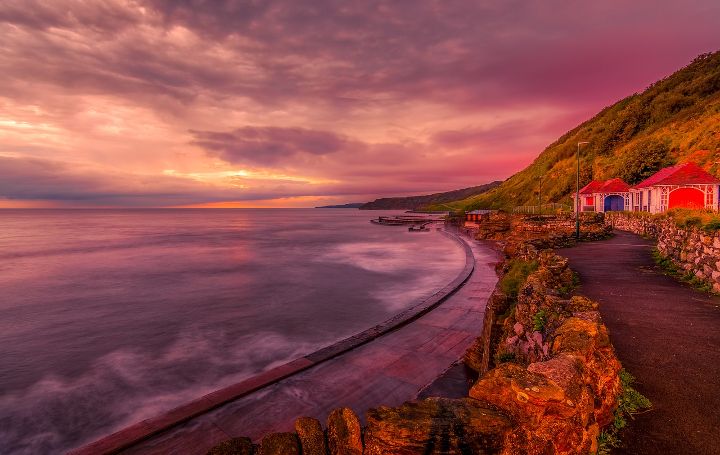
Scarborough, the capital of Tobago, is located on the southwestern shore of Rocky Bay. The harbor has been expanded to accommodate Ferries. The Botanical Garden, with its giant trees, and Fort King George are particularly worth seeing. From here, you can easily reach the neighboring island of Trinidad by Ferry or plane.
{%CAPTION%}
La Romana – Dominican Republic
The port in La Romana, a city in the Dominican Republic, is the port of departure and arrival for cruises operated by various cruise lines. Chartered flights operated by these cruise lines also frequently land here, so no further passport control is required after the flight. Passengers are taken directly to the ship by bus and don’t even have to worry about their luggage. The transfer time from the airports in Punta Cana or Santo Domingo to the ship is about one hour.

{%CAPTION%}
Montego Bay – Jamaica
Montego Bay is the second-largest city in Jamaica. It has an idyllic harbor where two ships can dock at the same time. The harbor terminal features a tourist information center as well as several shops. It’s worth taking a trip to the 11-kilometer-long beach in Negril or to Rick’s Café with Willidoo in western Jamaica. The iconic café is perched on a cliff right on the beach, and here you can watch a cliff diver take the plunge as soon as $20 has been collected for his jump.

{%CAPTION%}
Cozumel – Mexico
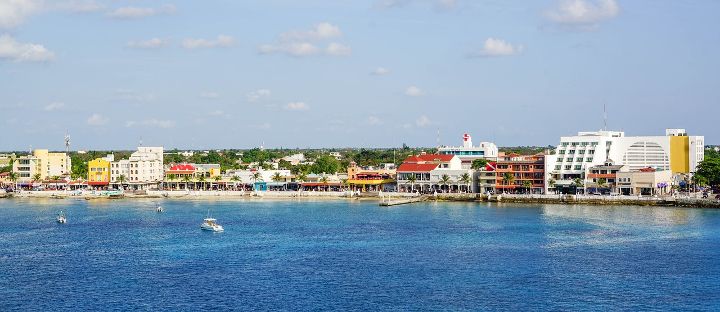
15 km from the mainland of Mexico is the island of Cozumel. The port has three terminals, so up to 10 ships can dock at the same time. These are the Punta Langosta Pier, the International Pier and the Puerta Maya Pier. If the berths are not sufficient, passengers are also brought ashore by tender boats. The airport is very close. From the Punta Langosta pier you can walk along a shopping street directly into the town of San Miguel. Cozumel has no public transport, only cabs and large cabs.
{%CAPTION%}
George Town – Cayman Islands
George Town is the name of the town at the harbor of the Cayman Islands, which are part of the British Commonwealth. The harbor is located in the southwest of Grand Cayman. Ships anchor off the harbor and transport passengers the 400 meters to shore via tender boats. Sometimes up to five ships anchor off the harbor. The island has a straightforward network of public minibuses that allow vacationers to explore the island on their own. The Omni Bus Depot is about 200 meters from the harbor. If you’d like to rent a car here, please note that traffic drives on the left. In the east, there is a beautiful kitesurfing beach; a coral reef protects the beaches.

{%CAPTION%}
Key West – USA
Key West is the southernmost point in the United States. If you want to explore the western or southern Caribbean, this is a good starting or ending point. That’s why the local harbor serves as a hub. The city’s streets are unique in that they were laid out in a strictly geometric pattern. A tour on the Conch Tour Train provides a good overview of Key West. The harbor itself has three docks: the Mallory Square Docks are closest to the city, followed by the Pier B Docks, and the Old Mole Docks are the farthest from the city.

{%CAPTION%}
Nassau – Bahamas
Nassau is the capital of the Bahamas, which after all consist of more than 700 islands. It is located on the east side of New Providence. The old town with the two forts Fincastle and Charlotte still has colonial charm. The harbor entrance is located in the north of Nassau, just less than 200 meters from Nassau’s Paradise Island. The island, formerly called Hog Island, can be reached via a bridge. At the pier are sometimes 5 and more ships at the same time. The modern terminal also has stores, a post office, tourist information and fast food.

{%CAPTION%}
St. John – Antigua
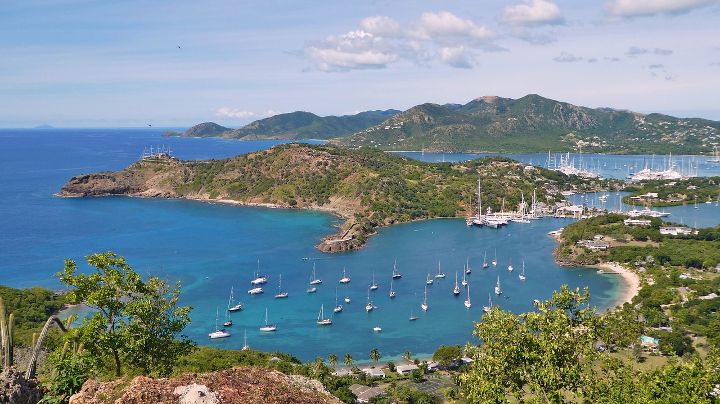
The St. John’s Harbor in Antigua has two piers, providing space for four ships. From the harbor, you can walk directly into town or take a taxi. Tours are also available here. The town’s two-towered cathedral is worth seeing, and the two shopping centers, Heritage Quay and Redcliffe Quay, feature a variety of small shops. Right at the harbor entrance stands Fort James, which was built in the early 18th century to ward off pirates. Here you can enjoy the beautiful view or admire the large cannons. The fort itself is largely in ruins. There’s a small restaurant right nearby. In Antigua, a 30-minute sightseeing helicopter tour is also available.
{%CAPTION%}
Road Town – Tortola – British Virgin Islands
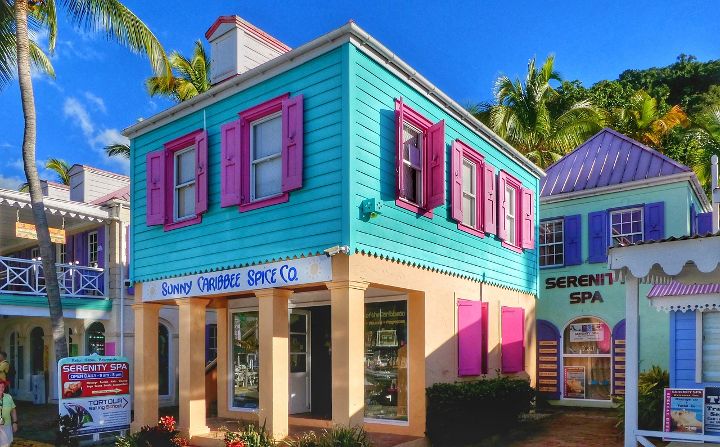
Road Town, the capital of the British Virgin Islands, is located on Tortola. Tortola Pier Park, situated at the harbor, features a terminal, shops, and restaurants. In addition to 19th-century colonial-style houses, the botanical garden—with its man-made waterfalls and tropical birds—is well worth a visit. The island is mountainous in the interior and is surrounded by many beautiful coves, where smugglers and pirates are said to have once lived. The most beautiful beaches, however, are found almost exclusively in the north.
{%CAPTION%}
Roseau – Dominica – Lesser Antilles
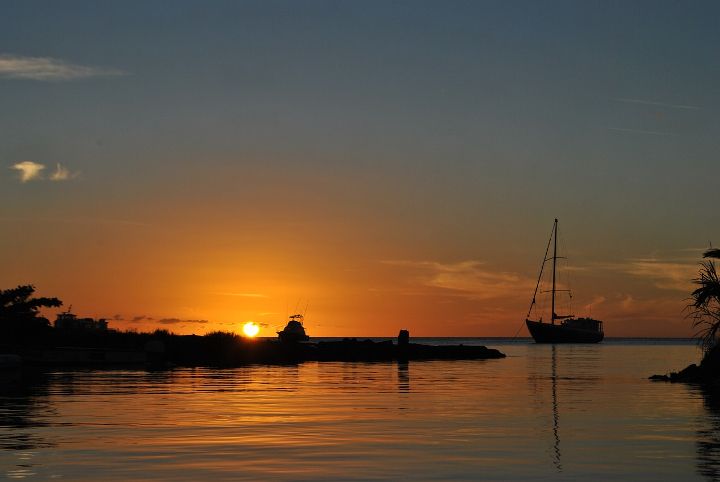
Roseau is the capital of Dominica, an island nation in the Lesser Antilles. For cruise ships, there is a dock at the Roseau Cruise Ship Berth, from which you can walk directly into the city center. At Ruins Rock Café, located 50 meters from the pier—a former supermarket that burned down—you can access free Wi-Fi. There’s a small tourist information office on the harbor grounds, and you’ll find a bus stop right outside the harbor exit. Another dock is the Woodbridge Bay Port, located about 2 km north of the first one. Smaller ships also use the Cabrits Cruise Ship Berth in the northwest of the island.
{%CAPTION%}
Bridgetown – Barbados
The port city of Bridgetown is the capital of Barbados. Located in the southwest, four large and two small ships can dock at the port’s piers at the same time. The large hall, which also houses the terminal, has various restaurants, a tourist information center and duty-free stores. In the interior of the island you will still see feudal land holdings of the sugar barons.

{%CAPTION%}
St. George – Grenada
Grenada, the southernmost of the Leeward Islands, has as its capital St. George’s in the southwest. It was built around a natural harbor bay, which has the shape of a horseshoe. Three ships can dock in the port at the same time. Additional ships bring their passengers ashore by tender boats. The city, which has preserved its colonial image to this day, connects directly to the port with the market and commercial streets. The terminal building does not have a tourist information center.

{%CAPTION%}
Kralendijk – Bonaire
Kralendijk, the capital of the Dutch island of Bonaire—which is part of the Lesser Antilles and lies north of Venezuela—has two piers. One ship can dock at each pier. There is a tourist information office right in the harbor. The town is adjacent to the harbor. Round-trip tours and taxi rides to the beaches are offered at government-regulated rates. Incidentally, there are no public buses in Kralendijk, although there are well-marked bus stops throughout the town.

{%CAPTION%}
Willemstad – Curaçao
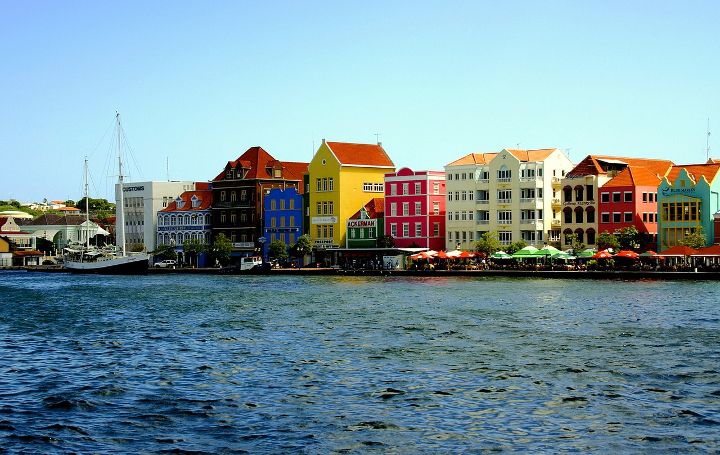
Willemstad is the capital of the island of Curaçao. The colorful houses in the old town are all built in the colonial style and are part of a UNESCO World Heritage Site. Other sights worth seeing include Fort Amsterdam, an aloe vera plantation, and the Hato Caves. The harbor is called Schottegat and is a natural formation. It is sheltered from the sea by Sint Annabaai Bay.
{%CAPTION%}
Oranjestad – Aruba
Oranjestad is the capital of Aruba. The port has four piers. Especially worth seeing is the 18th century fortress Zontman just near the marina. Here also still stands the former lighthouse Wilhelm III.

{%CAPTION%}
Belize – Honduras
Belize is located on the Caribbean coast of Central America and was known as British Honduras until 1981. Because of the coral reefs and the very shallow waters, large ships anchor about 5 nautical miles off the coast. High-speed tender boats take vacationers to the terminal—known here as Fort Street Tourism Village—in just 20 minutes. In addition to shops and restaurants, there are also tour operators here that offer shore excursions. Because of Belize’s dense jungle, you should only go on organized tours.

{%CAPTION%}
Pointe-à-Pitre – Guadeloupe – Lesser Antilles
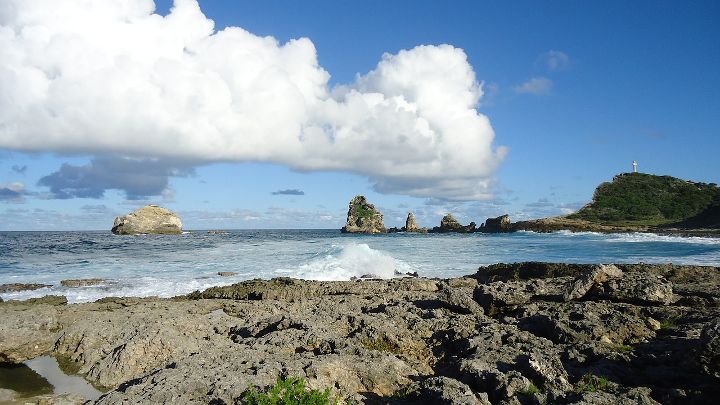
Guadeloupe is part of the Lesser Antilles, and with its two sections—connected in the middle by a bridge—it resembles a butterfly when viewed from the air. One wing is green and mountainous; the other is a beach paradise.
The capital, Pointe-à-Pitre, is home to the port, which has been redesigned and expanded in recent years. Two modern terminals offer Wi-Fi, shops, dining options, and a tourist information center. Each of the two berths is 320 meters long. French is spoken on the island, and the currency is the euro. The city center begins right at the harbor.
{%CAPTION%}
New Orleans – USA
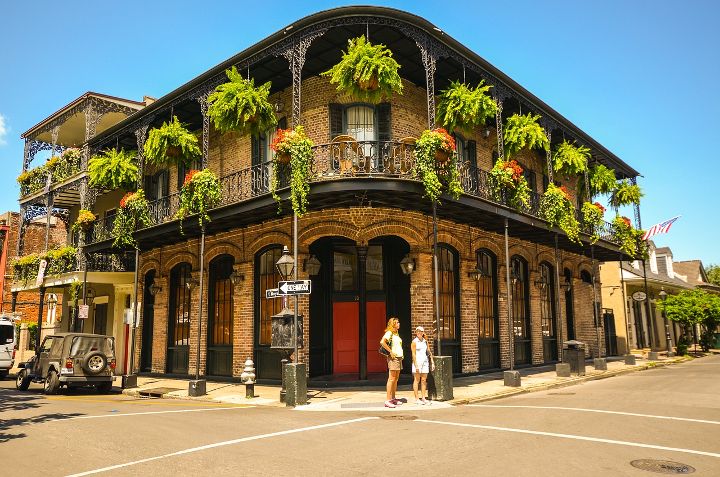
The port city of New Orleans is located in the southern United States on the Mississippi River. The seaport is a deep-water port from which cruises also depart for the Caribbean. Every year, about 700,000 people board ships here. Because of the particularly strong currents here, ships must leave the port at full speed. The French Quarter is just a few minutes away from the port by taxi and is well worth a visit. There, you’ll quickly hear the sounds of Dixieland or cool jazz on Bourbon Street.
{%CAPTION%}
Saint Kitts
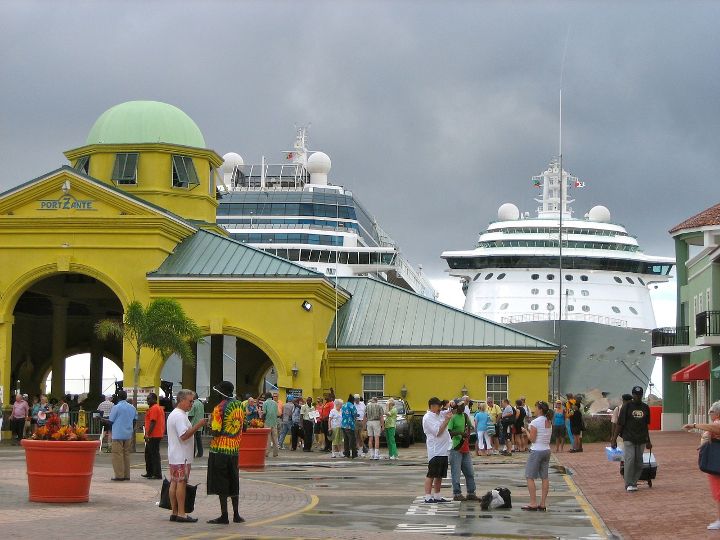
The modern Port Zante is located in the southwest, in the capital city of Basseterre. It is situated close to the city center on a small artificial peninsula. A very long pier allows one large ship to dock on each side. St. Kitts is located in the eastern Caribbean and features extensive rainforest as well as beaches with white and black sand. The colonial-era buildings in Basseterre are worth seeing; of particular interest is the Victorian clock tower on the central square “Circus,” which was modeled after Piccadilly Circus in London.
{%CAPTION%}
TOP 10 destinations in the Caribbean
Dunn’s River Falls, Nine Miles, and the Shining Lagoon in Jamaica
From Montego Bay, you can visit three of Jamaica’s attractions in one day with a guide. Dunn’s River Falls is 180 meters high and can be climbed. Since the waterfall has several tiers that flow into pools before continuing down, you can cool off again and again as you climb. On the way to Nine Miles, you’ll have the chance to shop or grab a bite to eat in Ocho Rios. Nine Miles is the final resting place of Bob Marley, who was also born here. On the way back to the coast, you can have dinner at Joa James’ restaurant and visit his art gallery. The best time to explore the Glowing Lagoon by boat is at sunset. As soon as the water is stirred up, it begins to glow. This is caused by phosphorescent microorganisms. This phenomenon is known to occur in only three places on Earth.

{%CAPTION%}
Stingray City on Grand Cayman
In the far northwest of Grand Cayman Island, in North Sound, there are many sandbars that fishermen used to frequent to process their catches. This left behind a lot of marine debris, which attracted stingrays in large numbers. “Stingray” is the English name for these creatures. The stingrays have stayed, and today they’re a major attraction because they’re so trusting. You can swim with them and even touch them, but in the crowd, you should be careful of the spines on their backs. If the crowds are too much for you, you also have the option of observing the animals from a glass-bottom boat. Feeding them pieces of squid is allowed; the stingrays will suck and nibble them right out of your hand. Wiping your hands on your swimwear or skin after holding squid can result in blue marks. The stingrays can smell it and will suck on your clothing or skin. All in all, this is an experience you’ll never forget.

{%CAPTION%}
Morne Trois Pitons National Park on Dominica
The national park begins just a few kilometers past the city of Roseau and is a UNESCO World Natural Heritage Site. A dense rainforest on volcanic terrain is home to several freshwater lakes and deep waterfalls. The best place to start a hiking tour is the village of Laudat, which is located right next to two waterfalls. The visitor center is also there, where you can get information in advance. Trafalgar Falls consists of two waterfalls and is a particularly popular destination. From a wooden viewing platform, you can see both falls—known as Father and Mother—at the same time. You’re also allowed to swim in the pool below the falls. Alternatively, you can take a well-maintained jungle trail to reach another swimming pool, the Emerald Pool, which was also formed by a waterfall. You can reach Middleham Falls from the visitor center in about an hour’s hike, for which sturdy footwear is strongly recommended. At 60 meters high, this waterfall is the largest on the island. The 1,400-meter-high Morne Trois Pitons volcano stands at the center of all this natural beauty. Boiling Lake is a 60-meter-wide thermal spring located south of the volcano. From Laudat, it takes about 3 hours to walk there—a journey well worth the effort, as the water bubbles in the center of the lake and remains a scorching 90 degrees Celsius even at the edge. In contrast, the water in the narrow Ti Tou Gorge is quite cold; you can only cross it by swimming to reach a small waterfall. But this gorge was the filming location for the movie “Pirates of the Caribbean” starring Johnny Depp. If you don’t have enough time for hikes, you can also reach all these spots by taxi in 3–4 hours.
In the footsteps of the Maya in Belize
In Belize’s dense rainforest, you can still discover remnants of the Maya today. However, you shouldn’t undertake such a tour on your own. The Mayan site of Lamanai is located on the New River Lagoon. From the harbor, take a bus for about an hour to Ayinha Eco Park. From there, the journey continues by boat through the rainforest along the New River to the lagoon. A visit to the Mayan site of Altun Ha also involves a boat ride. The bus takes about 1.5 hours to reach Altun Ha, and after the tour, you’ll take the bus for another hour to the Belize River. The excursion concludes with a 1.5-hour boat ride.

{%CAPTION%}
Crayfish Waterfall in Guadeloupe
The excursion begins in Pointe-à-Pitre and takes you to the national park on Basse-Terre. The landscape here is dominated by the 1,467-meter-high La Soufrière volcano. To reach the Cascade aux Écrevisses waterfall, take one of the taxis waiting in front of the terminal or a rental car. Since the path to the waterfall is very well marked, you can’t miss it. Park your car in the parking lot and hike for 10 minutes along a well-maintained trail through the rainforest to the waterfall. You’re allowed to swim in the waterfall, but the water is very cold. A large sign explains the different species of crayfish found in the water: five species of crayfish and one species of crab.
Old San Juan in Puerto Rico
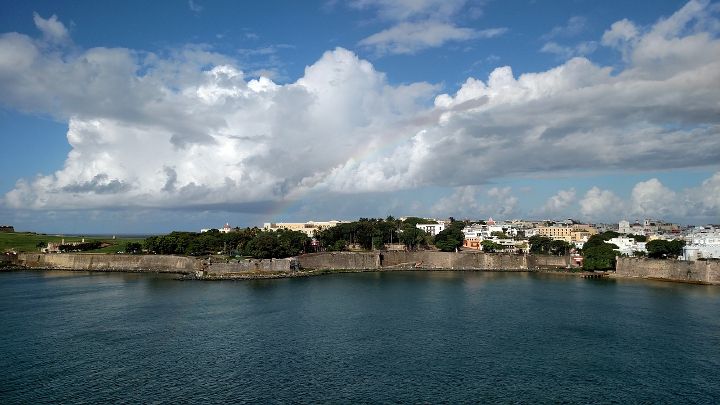
San Juan is the capital of Puerto Rico, and its Old Town is well worth a visit. The smallest main island of the Greater Antilles was fiercely contested from the 16th to the 18th centuries. Spain and other European powers fought over the territory, and it was also a point of contention during the Spanish-American War in the late 19th century. You might want to start your tour at the Fuerte San Cristóbal fortress. The Boulevard del Valle then takes you along the waterfront, and to your right below, you’ll see the Barrio La Perla—once built for the troops, it’s now home to about 10,000 people living in very cramped conditions. The Castillo de San Felipe del Morro was built as a fortress on a headland and is located right next to the harbor. The Puerta de San Juan is a historic city gate in the Old Town.
{%CAPTION%}
Cathedral of Fort-de-France in Martinique
The cathedral was built in 1895 in the Historicist architectural style on the site of several earlier churches and has been a designated historic landmark since 1990. Since the previous churches had been destroyed by fire, an earthquake, a tsunami, and finally a cyclone, this church was constructed as a lightweight, fire- and earthquake-resistant metal-frame structure using prefabricated components. The interior features a three-nave layout, with round arches and a dome set on an octagonal plan. Leaded stained-glass windows and the western tower façade reflect the Neo-Byzantine style. Thanks to its unique construction, which dates back more than 120 years, this cathedral is a worthwhile destination well worth visiting.

{%CAPTION%}
St. Maarten/St. Martin
St. Martin and St. Maarten are the names of two parts of the island that belong to different countries. There is even a border crossing right in the middle of the island. The history of the division—which is said to have taken place in 1648 between Dutch and French prisoners of war after the Spanish guards were driven out—is the reason for two very different ways of life.

{%CAPTION%}
St. Lucia rainforest
In the interior of St. Lucia, the rainforests are particularly worth seeing; you can view them from above in an organized one-hour cable car gondola ride. From the harbor you take the bus for about 30 minutes to the aerial streetcar base and board the gondola, designed for 8 people at a time, in which you then glide slowly over the rainforest.
Isabel de Torres Mountain near Amber Cove
The best way to climb Mount Isabell de Torres is by taking the Teleferico Puerto Plata cable car. From the Amber Cove Cruise Terminal, it’s just under a 30-minute ride to the cable car station in Puerto Plata. From the top, you’ll have a great view of Puerto Plata, and you can visit a botanical garden—for which you’ll need sturdy shoes.

{%CAPTION%}
Questions and answers about Caribbean vacation
Which shipping companies offer Caribbean ferries?
The following ferry companies offer Ferries in the Caribbean:
Ocean Ferry Belize, CTM Deher, Great Bay Express, Voyager, Ultramar, Baja Ferries, FRS Caribbean, Balearia Caribbean, and Safe Way Maritime.
What is the climate in the Caribbean?
Since the sun is almost perpendicular here north of the equator, it stays warm all year round and the water temperature also hardly differs from the air temperature, which averages between 25 and 28 degrees Celsius. There is hardly any cooling during the night. Nevertheless, there are differences, as the Caribbean covers a large area. In the eastern Caribbean, which includes the northern Lesser Antilles with Antigua, Barbuda, Guadeloupe, Saint Martin and Anguilla, the northeast trade wind blows moist ocean air to the coasts. Especially beautiful tropical plants grow here. It rains almost all year round, but least in the month of March and most in the months of July to December. The western Caribbean, on the other hand, is less dominated by the trade winds, so it tends to have a dry, desert-like climate, especially in the southern western Caribbean. The northern Caribbean, with Cuba, the Dominican Republic, Jamaica, and Haiti, as well as Puerto Rico, which together form the Greater Antilles, also has the greatest influence of moist ocean air in its eastern area. In Puerto Rico it rains at least 14 days a month and the humidity is generally above 80%. In Cuba, on the other hand, the months of November to April seem rather dry and also the humidity is usually below 80% during these months.
What clothes should I take with me?
Even if your trip doesn’t take place during the rainy season, rain gear is absolutely essential. For shore excursions, you should bring sturdy shoes, and for windy nights at the railing, a cardigan. Otherwise, the clothing requirements are much the same as for other tropical vacations. Lightweight, loose-fitting clothing that lets the wind blow through is ideal. In addition to swimwear and shorts or long pants, women should pack a few dresses and men should bring a suit and shirts for special evenings. However, not all cruise lines enforce this strictly; it’s best to check before your trip—there’s usually a dress code. Please also note that you can easily have your laundry done on board. In case your suitcase doesn’t arrive, it’s a good idea to divide your clothes between two suitcases and pack all essential items—such as your passport, cell phone, camera, chargers, and sunglasses—in your carry-on luggage.
Is a trip to the Caribbean with a baby or toddler possible and recommended?
All modern Ferries provide medical care during the voyage. Therefore, it is certainly possible to bring a baby or toddler along.
What shore excursions are recommended on the Caribbean islands?
The shipping companies offer several excursions for each port of call, from which you can choose what suits you best. Especially popular are city or island tours or visits to small craft workshops, which at the same time provide unique vacation souvenirs. Often, sightseeing flights over the island or diving excursions are offered, which reveal a fascinating Caribbean underwater world. In any case, there is enough choice to choose just the right tour for you.
Can I organize excursions in the Caribbean myself?
Yes, in principle, you can also organize the excursions yourself, ideally with local tour operators. However, you should make these arrangements well in advance of your trip so you don’t run out of time once you’re there. Of course, you should pay attention to the exact schedules for the excursions. So if 4 hours are allotted for excursions, you must be back on the ship once that time has elapsed. For privately organized excursions, it’s therefore advisable to build in enough extra time for the unexpected right from the start.
Is the swell in the Caribbean very strong?
No matter how rough the seas are, you usually won’t notice it on board. A ferry trip is generally very smooth. The larger the ship, the smoother the ride will be. However, during hurricane season, the seas can sometimes get rough. In such cases, as a precaution, the ship’s dining areas may be temporarily closed, or the ship’s course may be adjusted.
Do I need a passport or is an identity card sufficient for the Caribbean trip?
A valid passport is always required for travel to the Caribbean. It should be valid for at least 6 months after your planned return date. It’s also possible that you won’t be able to continue your journey by Ferry due to illness or other circumstances, in which case your passport is absolutely essential—even if exceptions may apply for Ferry travel. In some cases, you might also need to obtain a visa, and you can’t get one without a passport. Children of all ages need their own passport. Some countries require that at least two facing pages of the passport remain blank. If possible, you should therefore try to convince the border official to stamp a page that has already been stamped. Copies of your travel documents are always very important—if only to prove your identity should you become the victim of a pickpocket. If you’re boarding or transferring in the U.S. to catch your cruise, you must complete all required entry formalities there, even if you don’t leave the airport. This includes electronic passports—including those for children—with photos and fingerprints (the burgundy, machine-readable passports), as well as ESTA authorization, which must be applied for online no later than 72 hours before entry.
Our conclusion to the Caribbean trip
The Caribbean isn’t just a very idyllic travel destination; most of the major islands and island nations have now adapted very well to tourists and are increasingly relying on tourism for their livelihoods.
