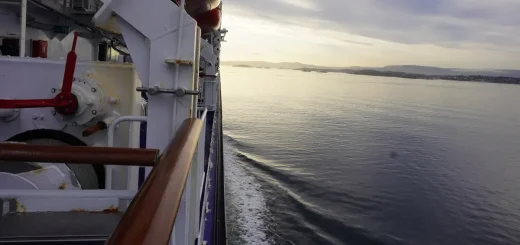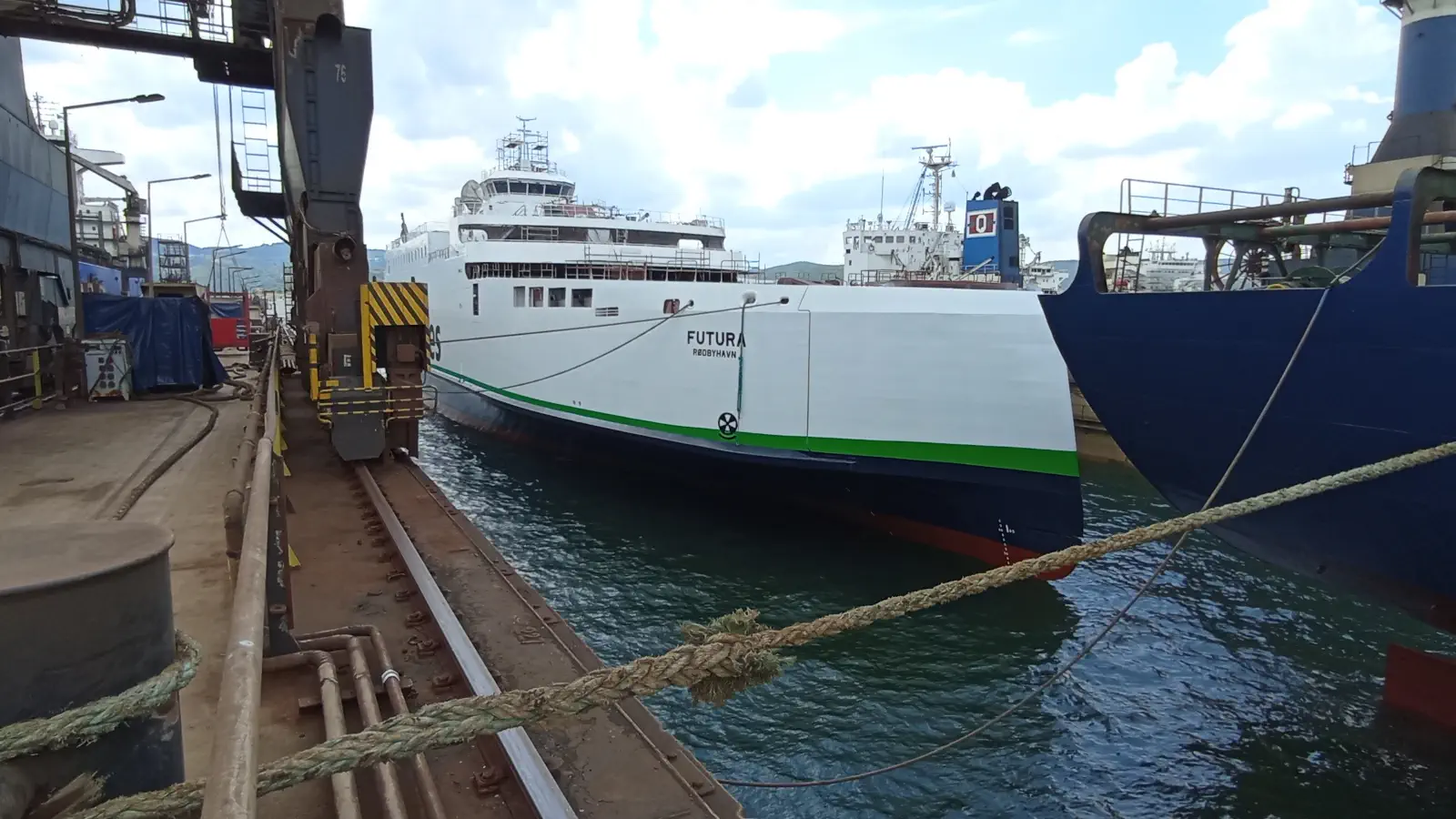
New Scandlines ferry THE BALTIC WHALE on its way to the Fehmarnbelt
The Scandlines shipping company is taking a major step towards emission-free shipping by launching its new Ferries on the route between Rødbyhavn(Denmark) and Puttgarden(Germany).
What is behind the Scandlines project?
The new double-ended RoPax ferry named THE BALTIC WHALE (previously “FUTURA”) was built at the Cemre Shipyard in Turkey and left the yard on October 3 for its ferry voyage to the Ferries.
- Key technical data at a glance
- Gross tonnage (GT): around 14,021.
- Length: 147.4 m.
- Vehicle loading meters: approx. 1,200 lane-metres (equivalent to around 66 trucks or trailers).
- Passenger capacity: 140 people/rider.
- Battery system: 10 MWh capacity; intended for all-electric operation.
- Loading time: In Rødbyhavn in approx. 17 minutes; from 2025 in Puttgarden in approx. 12 minutes.
- Planned crossing time: 45 minutes with all-electric operation.
- IMO number: 9966685
- Ship type: Ro-Ro ship (passenger and Ro-Ro cargo ship)
- Year of construction: 2025
- Flag: Denmark
Why this new building is important for Scandlines
With THE BALTIC WHALE, Scandlines is pursuing the goal of operating the Ferries Rødby – Puttgarden emission-free. The modern technology – especially the large battery system – significantly reduces the environmental impact. The new construction replaces older freight ferries and creates more capacity for trucks on the route. At the same time, the infrastructure in the ports is being modernized: Loading facilities, transformers and special cables have been installed.
Outlook
Now that the Ferry has left the shipyard in Turkey, it is being transported to Northern Europe. There, it will be prepared for regular service over the coming months. In the meantime, the loading and port facilities at the ports of Rødbyhavn and Puttgarden are being completed to ensure a smooth launch. If everything goes according to plan, THE BALTIC WHALE is expected to begin regular service from Rødby to Puttgarden in early 2026. So you can look forward to one of Europe’s most modern and environmentally friendly cargo Ferries operating on this important route in the future.
Conclusion
The new ferry marks a milestone: high capacity, state-of-the-art electric technology, and a clear commitment to sustainability. Whether you’re a regular user of the route or simply curious, you can look forward to seeing how this change will impact comfort, the environment, and efficiency. Sources: